
Licensed Marriage & Family Therapist (LMFT)
CA License #53759
Telehealth Across California
Encino, CA Office
CAMFT Member
Therapy tailored to where you are right now.


Trauma Therapy
Make sense of how painful experiences may continue to affect your emotions, relationships, and self-worth, as well as how you respond to stress.

Attachment-Based Therapy
Understand how early relationships can shape your expectations around closeness, conflict, trust, and connection.

Therapy for Dating and Relationships
Notice recurring patterns in who you choose, how you connect, and what happens when relationships become closer or more uncertain.

Couples Therapy
Identify the cycle beneath recurring conflict or distance and work toward feeling more heard, understood, and connected.

Therapy for Parents
Understand the reactions that come up in difficult parenting moments so you can respond with more choice and be the parent you intend to be.



Not sure where to start?

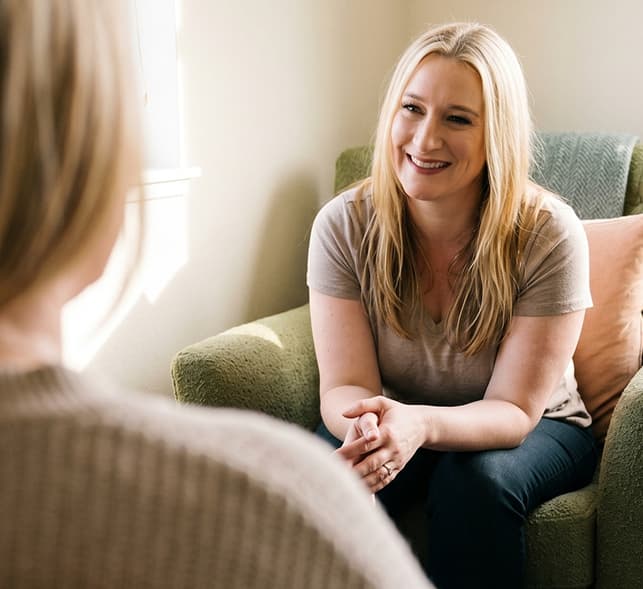
My work is attachment-based, somatic, relational, and trauma-informed.
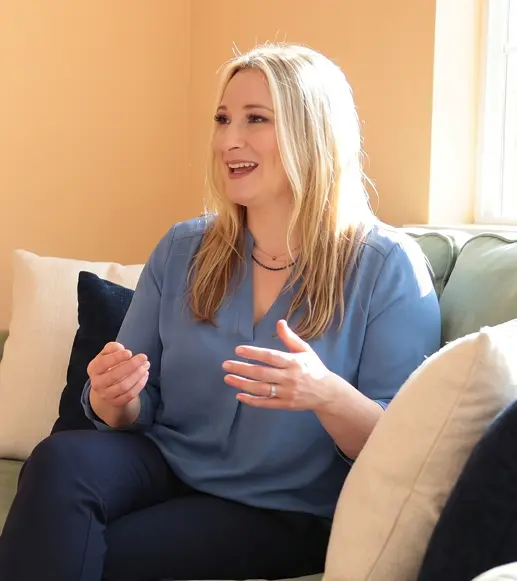

Therapy vs Coaching

A Licensed Therapist Explains the Difference
Many people try apps, AI chatbots, journaling, or self-help resources before starting therapy — and that makes sense as places to jump in. These tools can offer reflection, validation, language for your inner experience, and prompts to begin noticing patterns. But they cannot track your patterns across time, gently challenge you when you may be avoiding something important, or be held professionally accountable for what they tell you.
A related distinction comes up when people compare therapy with life coaching. The difference is not whether goals, habits, motivation, or accountability matter. Both therapy and coaching cansupport those areas. Therapy also allows us to explore the deeper emotional and relational patterns that can make those changes difficult. A licensed therapist brings clinical training to a relationship where your history, emotions, protective patterns, and ways of relating can be understood together over time.
Training
Graduate-level clinical education, supervised clinical experience, licensing exams, and ongoing continuing education.
Scope
Psychotherapy can help with anxiety, depression, trauma, relationships, life transitions, and other emotional concerns, while also supporting goals, habits, motivation, accountability, and personal or professional growth. Therapy gives us room to explore the deeper emotional and relational patterns that can keep you stuck and make change difficult.
Ethics & Oversight
Regulated by a state licensing board and held to legal and ethical standards for confidentiality, boundaries, documentation, and client care.
What Each Can Help With
Trauma, anxiety, depression, difficulties with trust and closeness, relationship distress, family patterns, life transitions, and other emotional or relational concerns. Therapy can also support goal-setting, decision-making, motivation, accountability, and personal or professional growth.
Insurance
Therapy may be eligible for out-of-network reimbursement if your plan includes out-of-network mental health benefits.
Not sure whether therapy is the right fit for you?
A free 30-minute phone consultation gives us a chance to talk about what you’re looking for.
Training
Training varies widely. Some coaches complete certification programs, but life coaching itself does not require a California mental health license.
Scope
Often focuses on goals, habits, motivation, accountability, and personal or professional growth. Coaching can be helpful for practical support and forward movement, while psychotherapy also allows us to explore how emotions, earlier experiences, and relationship patterns may be influencing what is happening now.
Ethics & Oversight
Ethical standards vary depending on the coach’s training or certification. Life coaching is not regulated as a mental health profession by the California Board of Behavioral Sciences.
What Each Can Help With
Goal-setting, habits, decision-making, motivation, accountability, life transitions, and personal or professional growth. Coaching is not psychotherapy or mental health treatment.
Insurance
Coaching is generally not reimbursed by health insurance as mental health treatment.
Not sure whether therapy is the right fit for you?
How It Works
Free 30-Minute Phone Consultation
Schedule Your First Session
Begin Weekly Therapy
What Clients Have Shared About Working With Me
Former Client
I went through a season where I felt like I could barely hold it together. Everything felt too heavy. It was more than I could carry by myself. My head, my heart, and my sense of purpose were all pulling in different directions. Working with Kirstin changed that. Her care, expertise, and the way she showed up for the work helped me move forward.
Former Client
I loved working with Kirstin, and I feel so good about how much I’ve grown because of our time together.
Client
Kirstin is more than just a therapist. She is an intuitive, compassionate, skilled professional who has helped me grow in ways I never thought possible. I’ve been working with her for the past few years and I’ve noticed how much I’ve been able to navigate in my life because of our work together. Her approach has been so different than previous therapists I’ve worked with. Instead of simply offering advice or telling me what to do, we work together to understand how to approach life moments with a compassionate lens. She is simply the best!
Former Client
I was able to open up about many topics.
Former Client
Kirstin helped me immensely. Over the four years Kirstin and I met regularly, the transformative positive growth I experienced was immeasurable.
She is thoughtful, genuine, and compassionate, and together we did amazing work reparenting my younger self and developing tools to identify and manage the ups and downs, impulses, and anxieties. Never heavy-handed or judgmental, but always engaged and open to exploring whatever side street the conversation organically led down (“It’s all important”). Thanks to Kirstin and the work we did together, I have peace and confidence that comes from having hope and feeling grounded in myself, using healthy strategies to overcome the emotional flashbacks and dysthymia. Thank you so much, Kirstin!
Frequently Asked Questions
How do I find the right therapist near me in Encino?
If you’re looking for a therapist near you in Encino, I offer a free 30-minute phone consultation.
Before we speak, I’ll send you a brief questionnaire so you can share what is bringing you to therapy and what you’re hoping to change. During the consultation, we’ll talk about what’s going on, you can get a feel for how I work, and we can decide whether working together feels like a good fit. My office is located on Ventura Boulevard in Encino, and I also offer online therapy throughout California.You can schedule a free 30-minute consultation or (818) 593-9047
Are you a therapist or a coach?
I’m a Licensed Marriage and Family Therapist (LMFT, CA License #53759) in Encino. I practice therapy, not coaching. That distinction matters: as an LMFT I am licensed, clinically trained, and bound by a professional code of ethics. I can diagnose, treat, and work with trauma and complex mental health concerns in a way that coaches are not trained or licensed to do.
Where is your office?
My therapy office is located at 16530 Ventura Blvd. #400, Encino, CA 91436. I offer in-person sessions at this location and online sessions to clients anywhere in California.
Do you take insurance?
I’m a private-pay, out-of-network therapist and am not in-network with any insurance plans. If you have a PPO plan, you may have out-of-network benefits and could be reimbursed a percentage of the session rate after meeting your deductible. As a courtesy, I can submit out-of-network claims electronically on your behalf when eligible, or provide a superbill for you to submit. Reimbursement is paid directly to you, and many clients also use HSA/FSA funds. Rates are discussed during a free phone consultation.
What do you specialize in?
As a trauma therapist and attachment therapist in Encino, CA, I specialize in trauma therapy, attachment-based therapy, therapy for parents, dating and relationship therapy, and couples therapy, along with the anxiety and depression that so often accompany them. The people I work with are not struggling because something is wrong with them. They are struggling because early experiences shaped patterns that were once protective and are now getting in the way.
Do you work with couples?
Yes. As a couples therapist in Encino, CA, I work from an attachment-based perspective, focusing on the underlying patterns that create distance and disconnection. Most relationship conflict is not really about the surface argument—the kitchen towels, the dishwasher, or the small thing that started the fight. There are often deeper layers underneath, shaped by unresolved trauma, unmet needs, family-of-origin patterns, or earlier relationship experiences. Part of couples therapy is helping each partner feel more seen, heard, and like they matter to the person they love.
What is attachment-based therapy, and how is it different from traditional talk therapy?
Attachment-based therapy looks at the relational patterns formed early in life that may still be quietly shaping your adult relationships. While some therapy focuses mainly on managing symptoms or solving present-day problems, attachment-based work also explores the deeper roots underneath those struggles. The goal is not only to feel better in the short term, but to understand why the same patterns keep showing up and begin to change them. As an attachment therapist in Encino, I help you work with what is happening in your current life while also exploring the early experiences and attachment wounds that may shape how you relate, protect yourself, and seek connection.
How is working with a private-practice therapist different from using an online therapy platform?
Online therapy platforms can make therapy feel more accessible, and some people try them first. Working directly with a private practice therapist is often more personal, consistent, clinically individualized, and able to go beneath the surface over time. You are not being matched by an algorithm or moved through a high-volume system. You are choosing a specific therapist whose training, experience, and approach fit what you are looking for. For trauma, attachment wounds, anxiety, depression, and relationship patterns, that continuity and depth can make a meaningful difference.